
- Geosense
Manual 3D Crack Meter
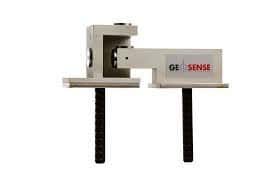
The Manual 3D Crack Meter is a simple yet highly effective instrument designed to measure three-dimensional crack movement in structures. It provides reliable displacement readings along the X, Y, and Z axes, making it suitable for assessing structural behavior in buildings, tunnels, bridges, retaining walls, and other civil engineering assets. Because it does not rely on power or complex electronics, the instrument remains a dependable option for long-term monitoring in remote or challenging environments.
The device uses precision mechanical scales and reference plates to track subtle changes in crack width and movement. As a result, engineers can measure structural changes accurately, even when the displacement is very small. In addition, the instrument is easy to install and requires minimal training, which helps reduce field time. When combined with regular inspection intervals, it provides a clear picture of structural health, helping teams identify risks early and take corrective actions.
Beyond its simplicity, the Manual 3D Crack Meter is valued for its durability. Its components are manufactured from corrosion-resistant materials, enabling consistent performance in both indoor and outdoor applications. Since all measurements are manually recorded, the instrument remains unaffected by environmental noise, electromagnetic interference, or power failures. This reliability makes it a practical choice for routine inspections as well as long-term structural monitoring campaigns.

Key Features
- Three-axis measurement for monitoring displacement along X, Y, and Z directions.
- High-precision mechanical scale suitable for detecting small changes in crack movement.
- Robust, corrosion-resistant components for long-term stability.
- No power supply needed, ideal for remote or difficult locations.
- Quick installation and simple operation, reducing overall field time.
- Compatible with various structures, including concrete, masonry, steel, and rock.
Other Information
Benefits
-
Provides clear and dependable readings without the need for complex electronics.
-
Ensures long-term stability, even in harsh field environments.
-
Offers cost-effective monitoring, ideal for routine inspections.
-
Helps engineers identify structural risks early and plan maintenance more effectively.
-
Supports comprehensive structural analysis thanks to three-directional measurement capability.
-
Reduces operational challenges through its simple manual workflow.